ВНИМАНИЕ!
Наша конференция посвящена космической тематике и компьютерным играм.
Политические вопросы и происходящие в мире события в данный момент на нашем сайте не обсуждаются!
|
| В В »В [X4][Mod] - Star Wars Interworlds | страница 1 |
|
|
|
|
Канал X4: Foundations В»
Модовый и скриптовый отсек X4: Foundations: В«[X4][Mod] - Star Wars InterworldsВ» |
|
|
|
alexalsp
 В 535В EGP В 535В EGP
     
Рейтинг канала: 5(236)
Репутация: 56
Сообщения: 4737
Зарегистрирован: 12.08.2014
  |
|
 Мод устанавливается только на чистую игру с DLC.
Не должно быть ни каких модов, только те которые описаны в конце описания под спойлером.
ЧАВО / ИНФО | ДИСКОРД
СКАЧАТЬ - 0.66 | Демо ролик | Скачать русский язык для SWI
Русский перевод: alexalsp | romich
Стримы от Ромича
Описание
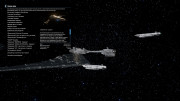
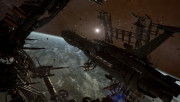
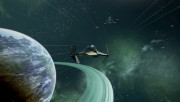
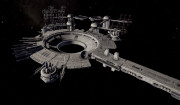
Этот мод - наша попытка привнести атмосферу Звездных войн в игровой движок X4:Foundations и создать первую в истории космическую песочницу в далекой-далекой галактике.
Все общение по моду происходит в ДИСКОРД, пожалуйста, присоединяйтесь к сообществу, мы рады всем.
|
В ИСТОРИЯВ В В (кликните здесь для просмотра)
Прошло 10 лет после смерти императора Палпатина. Галактическая Империя распалась на части и была изгнана из галактического ядра. Недавно образованная Новая Республика находится в хрупком, младенческом состоянии, удерживая ядро и близлежащие системы, но пытаясь заручиться поддержкой галактики. Тем временем Альянс продолжает освобождать новые системы и устанавливать порядок, обеспечивая безопасность, хотя не все планеты-участницы хотят быть частью Новой Республики.
Без Сильной Руки Империи, Независимая торговая гильдия захватывает контроль над системами и рынками Внешнего кольца, что приводит к регулярным конфликтам с властями корпоративного сектора. Мандалорцы по-прежнему раздроблены и враждуют за оставшуюся территорию, а охотники за головами и пираты находят легкую добычу в хаосе после внезапного бегства Империи.
|
|
В КАНОН ИЛИ ЛЕГЕНДЫВ В В (кликните здесь для просмотра)
Предпочтение отдается оригинальной трилогии и эпохе приквелов с некоторыми добавлениями нового канона только там, где это имеет смысл и не выглядит неуместным.
Например, у нас нет фракции Нового Ордена, но несколько выбранных их кораблей могут появиться в моде в будущем, если они впишутся и не будут выглядеть глупо.
|
|
В ИГРА НА ПЕРВОМ МЕСТЕ:В В В (кликните здесь для просмотра)
Хотя мы стараемся оставаться верными многим концепциям и истории "Звездных войн", мы также хотим предоставить игроку максимальную свободу в выборе способа игры (с некоторыми ограничениями, связанными с базовой игровой механикой). Вы можете рассчитывать встретить корабли из других эпох (хотя и модернизированные в соответствии с нашей историей), а также несколько новых и старых фракций из вселенной "Звездных войн".
|
|
В УстановкаВ В В (кликните здесь для просмотра)
Скачайте мод с Nexus Mods или Google Drive.
Распакуйте содержимое архива в папку " X4 Foundations/extensions" вашей игры (папки с DLC должны находиться там же).
НЕ УСТАНАВЛИВАЙТЕ МОД В ПАПКУ С ДОКУМЕНТАМИ.
Если вы все сделали правильно, в папке " extensions" должна быть папка так:
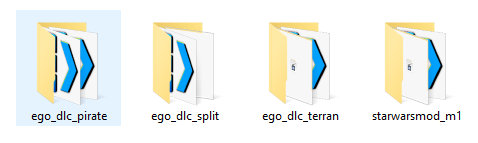
Мод Star Wars Interworlds является полной модификацией, это означает, что мы затрагиваем почти каждую часть игры, поэтому вы можете ожидать, что баланс и некоторые механики будут отличаться от ванильных.
Считается, что игрок знаком с основными механиками игры, так как они все еще применяются. Если вы новый игрок в X4 - ПОЖАЛУЙСТА, СНАЧАЛА ПРОЙДИТЕ ОБУЧЕНИЕ ПО ВАНИЛЬНОЙ ИГРЕ!!!
|
|
В ОБЩИЕ РЕКОМЕНДАЦИИВ В В (кликните здесь для просмотра)
Pdfcoffee Twilight 2000
Ana slid the packet across like passing a ledger. The man opened it and read out a line that smelled like memory: a checklist of supplies, a sketch of a makeshift radio, a map of transit lines annotated with hand-drawn safe houses. There were journal entries too—small, precise confessions written in an ink that had bled where rain touched the paper. Each entry was dated in a shorthand that could have been a calendar or a countdown.
People read it differently. For some, it modeled contingency—the mathematics of what to keep and what to burn. For others, it mapped a yearning: to be ready, to be sovereign, to hold meaning in the margin between one day and the next. The packet coaxed its readers into talking, and talk begat lists and then plans. Ana started pinning notes to a board behind the counter: “COMMUNITY GARDEN — SEE MAP,” “RADIO CHECK — TUES 19:00,” “SKILLS NIGHT — SEWING & TIRE REPAIR.” Her printer, which had been a simple appliance, became a bellwether of communal intent.
As months folded into a year, pdfcoffee’s printed packets multiplied. People annotated them, added sticky notes and new pages: an improvised curriculum on scavenging safely, a primer for sewing buttonholes in patched coats, a small treatise on reading barcodes to estimate shelf life. The packet—originally a game-turned-manual—mutated into a living codex of communal memory. It was less about the world-ending hypotheticals and more about the ordinary arithmetic of keeping a neighborhood awake and fed. pdfcoffee twilight 2000
One evening, a woman who’d helped organize the gardens set a pot of stew on the counter and wrote, in thick marker, a new header for the corkboard: WHAT WE KEEP. Beneath it, people added slips: seeds, a soldering iron, a lullaby, a roasted-vegetable recipe, a radio frequency, the address of someone who knew how to fix carburetors. They stapled a photocopy of the Twilight packet there too, not as a relic but as a foundation—an artifact that had been made alive by the people who read and argued and repaired and shared.
One week, someone identified a building on the edges of town marked in the packet as a possible cache. It was a flat, low structure with rusted vents and an address that no longer appeared on the city’s newer maps. A group went, armed with a flashlight, a map, and a copy of the packet. They came back with a box of canned peaches, a spiral-bound field manual damp but legible, and an old radio with a dial that scratched like gravel. They also returned with a story: there had been another person there, an older woman who’d been living off the edge of maps. She had kept a ledger of births and small deaths, of bargains struck and favors remembered. Ana slid the packet across like passing a ledger
An argument started the night an ex-military man proposed a nightly watch. He spoke with the blunt certainty of a man who had been trained to make quick lists and give orders that stuck. Some welcomed structure. Others bristled. A schoolteacher resisted, not because she feared safety but because she feared the old language of command would make them forget why they gathered: to exchange knowledge, not to form a militia. They compromised: a rotating neighborhood patrol, more solidarity than force, notes left on doors rather than men in uniforms. It felt like a small treaty against the larger anxieties that churned outside the café’s windows.
The ledger’s presence folded the packet inward. Twilight 2000 had taught them how to carry things; the ledger taught them what to carry for—faces, names, debts of kindness. The café began to catalogue not just survival tips but the lives behind them: where someone used to teach, the name of a child who’d once run through the park now a field of saplings, the recipe for a bread that rose without yeast because yeast had become a luxury. Each entry was dated in a shorthand that
Outside, the rain had stopped. The city smelled like damp concrete and the green rises of new leaves. The photocopied packet sat on the counter with a cup ring in the margin like a halo. In that light, Twilight 2000 read less like an instruction for the end and more like an invitation for what comes next: a small, stubborn insistence that communities can make archives of kindness out of manuals of fear. |
|
В Список модов для Star Wars InterworldsВ В В (кликните здесь для просмотра)
|
ПЕРЕВОД
Перевод готов и скачать можно по ссылке выше. Во время игры отлавливайте косяки и вносите их исправленный вариант в таблицу, не стесняйтесь.
ДЛЯ ВЕРСИИ ИГРЫ 6.20
НЕ СОВМЕСТИМ С ВЕРСИЙ ИГРЫ 7.0Х - естественно, когда она выйдет....
_________________
CMDR: Fallout(EG)
ED - если застряли: https://discord.gg/yZqwPbJaCq
https://t.me/+ApizhYp4JD9kMjU6
Пользуйте мои моды как хотите....
Последний раз редактировалось: alexalsp (19:15 25-02-2024), всего редактировалось 28 раз(а) |
|
|
|
alexalsp
В 535В EGP
Рейтинг канала: 5(236)
Репутация: 56
Сообщения: 4737
Зарегистрирован: 12.08.2014
|
|
Star Wars Interworlds - v.0.70 бета 2 - для версии игры 6.20
Русский для версии 0.70 бета 2
_________________
CMDR: Fallout(EG)
ED - если застряли: https://discord.gg/yZqwPbJaCq
https://t.me/+ApizhYp4JD9kMjU6
Пользуйте мои моды как хотите....
Последний раз редактировалось: alexalsp (14:14 18-09-2023), всего редактировалось 1 раз |
|
|
|
Ron-lg
 В 108В EGP В 108В EGP
Репутация: 6
Сообщения: 1044
Зарегистрирован: 07.12.2011
|
|
Привет, а где-нибудь собирается база по характеристикам кораблей, оружия со щитами, карта?
По типу таких:
https://www.qsna.eu/x4/ships
https://roguey.co.uk/x4/
|
|
|
|
alexalsp
В 535В EGP
Рейтинг канала: 5(236)
Репутация: 56
Сообщения: 4737
Зарегистрирован: 12.08.2014
|
|
Только дискорд
https://discord.gg/W9a8wJSp
_________________
CMDR: Fallout(EG)
ED - если застряли: https://discord.gg/yZqwPbJaCq
https://t.me/+ApizhYp4JD9kMjU6
Пользуйте мои моды как хотите.... |
|
|
|
alexalsp
В 535В EGP
Рейтинг канала: 5(236)
Репутация: 56
Сообщения: 4737
Зарегистрирован: 12.08.2014
|
|
Star Wars Interworlds - v.0.72
Новые корабли:
Дредноут Кандосии (Мандалорский)
Х-крыло T70 (3 вида окраски, Новая Республикиа, Повстанцы)
Роскошная яхта СороСуб 3000 (Хатты)
Новый игровой старт с участием хаттов
Обновленные значки Мандалорской факции
Улучшены текстуры некоторых кораблей Мандалоров
Новые модели планет/лун
Планета Татуин
Планета Корусант
Планета Коррибан
Планета Куат
Планета Нар Шадаа
Планета Мустафар
Обновлены модели турелей DBY 827
Добавлена синяя малая счетверенная турель на Камино
Частичная интеграция мода kuertee UI Extensions (сторонним модам, требующим внешний мод, все равно придется устанавливать его отдельно, но интегрированные моды kuertee вполне подойдут)
Добавлена новая пользовательская классификация кораблей (меню покупки и энциклопедия)
Исправления гражданства и различных модов kuertee
Исправление: некоторые корабли были слишком маневрены и уклонялись от огня
Подправлены параметры для боя с низким уровнем внимания
Исправлен лифт мостиков в имперском стиле (пожалуйста, покиньте мостик перед обновлением версии мода)
Исправлены требования к репутации некоторых второстепенных фракций для получения лицензий, связанных со станцией
Исправлены неправильные расы в имперских модулях обитания, в результате чего купленные корабли имели неимперский экипаж
Исправлена ошибка, из-за которой имперские фракции не строили жилые модули
Исправлена ошибка, из-за которой пираты иногда использовали защиту вместо атаки
множество других мелких исправлений
Обновлен на Nexus
Ссылка на Google: https://drive.google.com/drive/folders/1ljKFeLPw4L0Y6jP8CQ7v7Hrr-edCEZr0?usp=sharing
С Рождеством и Новым годом
_________________
CMDR: Fallout(EG)
ED - если застряли: https://discord.gg/yZqwPbJaCq
https://t.me/+ApizhYp4JD9kMjU6
Пользуйте мои моды как хотите.... |
|
|
|
alexalsp
В 535В EGP
Рейтинг канала: 5(236)
Репутация: 56
Сообщения: 4737
Зарегистрирован: 12.08.2014
|
|
Star Wars Interworlds - v.0.73
Русский перевод
_________________
CMDR: Fallout(EG)
ED - если застряли: https://discord.gg/yZqwPbJaCq
https://t.me/+ApizhYp4JD9kMjU6
Пользуйте мои моды как хотите.... |
|
|
|
alexalsp
В 535В EGP
Рейтинг канала: 5(236)
Репутация: 56
Сообщения: 4737
Зарегистрирован: 12.08.2014
|
|
Обновлен русификатор.
Давно не заглядывал в таблицу перевода, так как долгое время там ни кто ни чего не делал. Уже и потерял смысл туда смотреть. Сегодня просто глянул обновить текст под версию 0.73 и увидел чудо )))
Пришлось операьтвно все правки применять и выкладывать обоновленный русик.
Огромное человеческое спасибо человеку или человекам вносившим правки в таблицу перевода. К сожалению человек не указал свой ник пожелав остаться неизвесным...
Таблица перевода обновлена.
_________________
CMDR: Fallout(EG)
ED - если застряли: https://discord.gg/yZqwPbJaCq
https://t.me/+ApizhYp4JD9kMjU6
Пользуйте мои моды как хотите.... |
|
|
|
alexalsp
В 535В EGP
Рейтинг канала: 5(236)
Репутация: 56
Сообщения: 4737
Зарегистрирован: 12.08.2014
|
|
Привет, друзья! Вышел патч 0.86 — теперь совместим с обновлением игры 7.6.
Старые сохранения ПОДДЕРЖИВАЮТСЯ.
https://drive.google.com/file/d/1-xmvHTi9Bnn8Fko3I8VqafqlAD9sVd3k/view?usp=drive_link
_________________
CMDR: Fallout(EG)
ED - если застряли: https://discord.gg/yZqwPbJaCq
https://t.me/+ApizhYp4JD9kMjU6
Пользуйте мои моды как хотите.... |
|
|
|
|
|
|
|
|
Канал X4: Foundations ->
Модовый и скриптовый отсек X4: Foundations: В«[X4][Mod] - Star Wars InterworldsВ» |
|
|
| К списку каналов | Наверх страницы |
Цитата не в тему: И чего там только не было - и Шурупыч общался с Мелек часами при помощи одного смайла, И Флаффя общался с Шурупычем тоже одним смайлом, и многим нравились эти содержательные беседы и все были счастливы...(вспоминает Harley чат)
|
| » [X4][Mod] - Star Wars Interworlds | страница 1 |
|