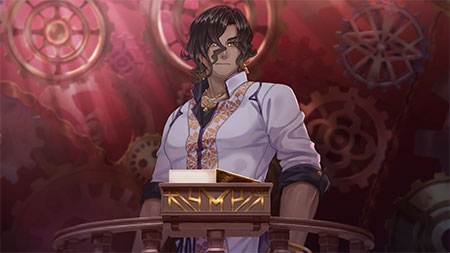
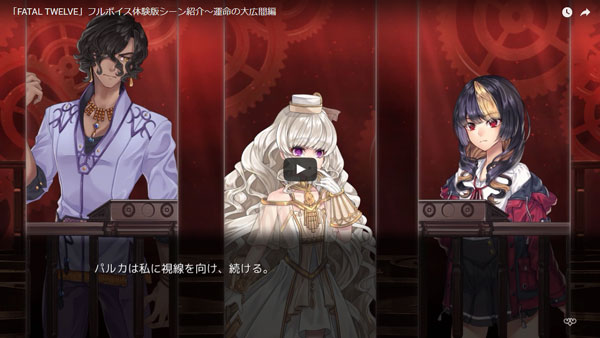
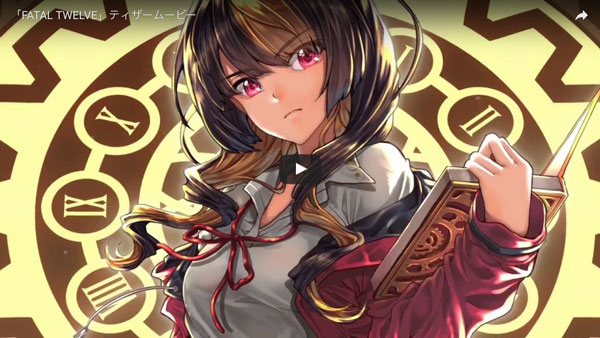
"Good evening, my lovely little slaves to fate."
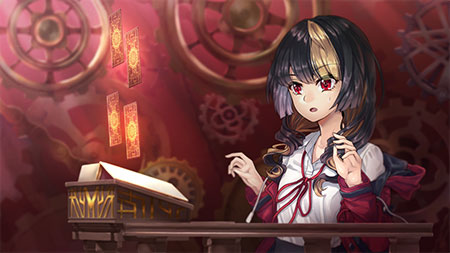
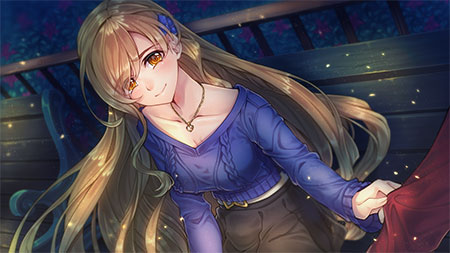
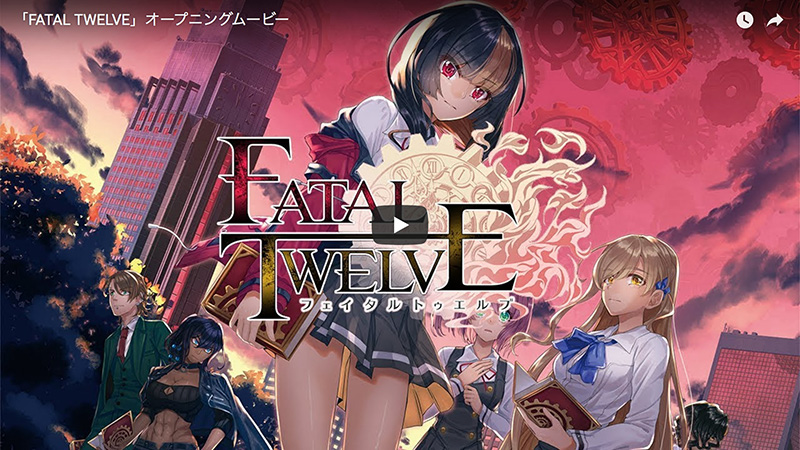
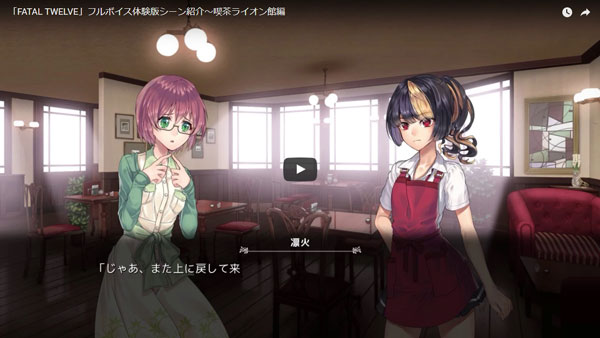
Shishimai Rinka was a highschooler who ran a small café named Lion House in place of her grandmother. She lived her life much like any other person her age, but one day, she was caught up in an explosion while returning home on the train alongside her friend, Hitsuji Naomi. In an attempt to save her friend's life, she shields her on instinct the moment the explosion goes off, losing her life in the process. However, before she knew it, she was back at Lion House, happily chatting with her friends as if nothing had happened in the first place.
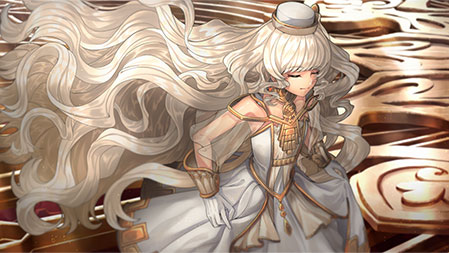
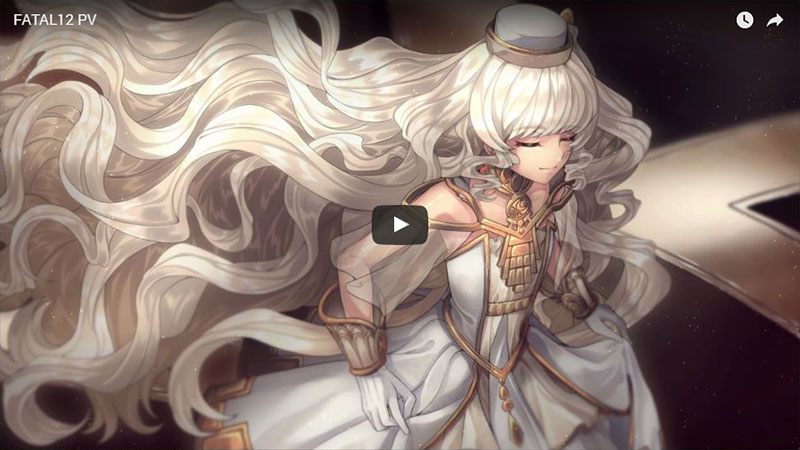
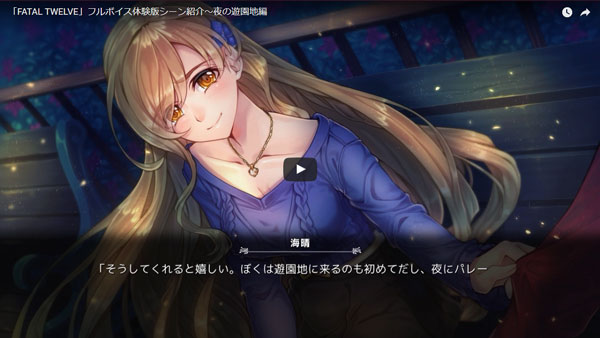
A few days later, she found herself in a strange world. Here she met Parca, an odd girl claiming to be a goddess. It turns out that she had somehow become a participant in Divine Selection, a ritual carried out over twelve weeks by twelve people, which allowed them to compete in order to undo their deaths. What shocked Rinka most of all, however, was the presence of her friend Mishima Miharu amongst the twelve.
In order to make it through Divine Selection, one must eliminate others by gathering information regarding their name, cause of death and regret in the real world, then "electing" them.
This turn of events would lead to her learning about the truth behind her death, as well as her own personal regrets. She would also come to face the reality that Miharu was willing to throw her life away for her sake, as well as the extents to which the other participants would go to in order to live through to the end.
Far more experiences than she ever could have imagined awaited her now, but where will her resolve lead her once all is said and done...?
The century turned in its steady way—new theorems, new software, new examinations—but numbers retained their shape, and stories kept opening doors. The Oxford Mathematics for the New Century 2A PDF, at first a small and secret thing, had done something larger than any single syllabus: it reminded people that rigor and imagination were not enemies but collaborators, and that teaching could be as much about inviting minds into a place as about mapping its terrain.
She hadn’t expected to find it. It arrived as a stray link in an old mailing list for tutorial partners, buried under months of administrative notices. Curious, she tapped. The download finished with a polite ping; the cover unfolded: a minimal design, the Oxford crest, and beneath it the subtitle she hadn’t noticed in the message—“For Students Who Want to Think.” oxford mathematics for the new century 2a pdf top
The tutorial hall, usually a battlefield of terse remarks and politely suppressed confusion, softened. They traced the string’s motion with words and diagrams, then slid naturally into the linear algebra beneath. When the formal argument arrived—vectors, operators, boundary conditions—it felt inevitable instead of imposed. By the end, the tutor, who rarely smiled in public, praised the clarity of the idea rather than the cleverness of the computation. The century turned in its steady way—new theorems,
One winter evening, during a snowstorm that muffled the city’s footsteps into slow crescendos, Evelyn found an email in a departmental listserv. It announced a small symposium: “Mathematics for the New Century.” The organizers were modest but thoughtful; speakers would include teachers from schools and professors who taught large lectures and tutors who worked one-on-one. Evelyn signed up to present a short talk about the tutorial experiment sparked by the 2A PDF. It arrived as a stray link in an
The book felt different from the outset. Its first chapter read less like a manual and more like an invitation. Exercises were framed as questions to be argued over tea; examples were stories—how a shepherd in a northern valley might count sheep in a way that led naturally to induction; how a potter’s intuition about symmetry could illuminate group actions. The authors wrote as if they trusted the reader to be alert, to bring imagination along with algebra.

The century turned in its steady way—new theorems, new software, new examinations—but numbers retained their shape, and stories kept opening doors. The Oxford Mathematics for the New Century 2A PDF, at first a small and secret thing, had done something larger than any single syllabus: it reminded people that rigor and imagination were not enemies but collaborators, and that teaching could be as much about inviting minds into a place as about mapping its terrain.

She hadn’t expected to find it. It arrived as a stray link in an old mailing list for tutorial partners, buried under months of administrative notices. Curious, she tapped. The download finished with a polite ping; the cover unfolded: a minimal design, the Oxford crest, and beneath it the subtitle she hadn’t noticed in the message—“For Students Who Want to Think.”
The tutorial hall, usually a battlefield of terse remarks and politely suppressed confusion, softened. They traced the string’s motion with words and diagrams, then slid naturally into the linear algebra beneath. When the formal argument arrived—vectors, operators, boundary conditions—it felt inevitable instead of imposed. By the end, the tutor, who rarely smiled in public, praised the clarity of the idea rather than the cleverness of the computation.
One winter evening, during a snowstorm that muffled the city’s footsteps into slow crescendos, Evelyn found an email in a departmental listserv. It announced a small symposium: “Mathematics for the New Century.” The organizers were modest but thoughtful; speakers would include teachers from schools and professors who taught large lectures and tutors who worked one-on-one. Evelyn signed up to present a short talk about the tutorial experiment sparked by the 2A PDF.
The book felt different from the outset. Its first chapter read less like a manual and more like an invitation. Exercises were framed as questions to be argued over tea; examples were stories—how a shepherd in a northern valley might count sheep in a way that led naturally to induction; how a potter’s intuition about symmetry could illuminate group actions. The authors wrote as if they trusted the reader to be alert, to bring imagination along with algebra.